

|
Heater Motor Question??
|
||||
|---|---|---|---|---|
|
Home away from home
 

|
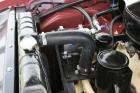
My understanding on the heater motor in my car ('39 but the heater is, I believe, from a '41) is that it is a reversible unit that turns one way to blow heat down to the floor and the opposite way to blow air up to the defrost. There are 3 wires coming out of the motor housing. I am told by an electric motor rebuilder here that it is not reversible and that they didn't even make reversible motors in that era. I don't know how the air can be redirected up to the defrost circuit without the motor reversing, yet I am thinking this technician should know what he is talking about. Can somebody clarify this for me?? Thanks in advance. Chris.
Posted on: 11/27 15:52
|
|||
|
'If you think you can, or you think you can't - you're right!' Henry Ford.
1939 Packard Six, Model 1700 |
||||
|
||||


|
Re: Heater Motor Question??
|
||||
|---|---|---|---|---|
|
Home away from home

|
First of all, do you know if one of the three wires is a ground wire?
If you can't figure out which one is which, post ohm readings of each wire to a clean spot on the case, as well as each wire to each other. You could definitely make reversible motors in that era by simply reversing the field polarity, this is how the power antenna motors work in the '50s cars.
Posted on: 11/27 17:42
|
|||
|
1955 400 | Registry | Project Blog
1955 Clipper Deluxe | Registry | Project Blog 1953 Clipper Deluxe | Registry | Project Blog 1955 Clipper Super Panama | Registry 1955 Clipper Custom | Registry Email (Parts/service inquiries only, please. Post all questions on the forum.) service@ultramatic.info |
||||
|
||||

|
Re: Heater Motor Question??
|
||||
|---|---|---|---|---|
|
Home away from home
|
Thanks PGH Ult & Howard for your replies. Let me preface my answer with the statement that when it comes to electrical, I border on being a bit of a dunce. Having said that, here is what I do know:there is a loom with 3 wires coming out of the motor that go to my control switch on the dash. A red, one yellow and a brown wire. There is also a short wire coming out of the same port that was screwed to the floor of the car. The 3 coloured wires go to a 4 contact switch and the forth contact on that switch is a fused power wire. When I check for ohms continuity, I find there is full continuity between the short ground wire and the yellow wire. Oddly (to my thinking) there is no continuity between the ground wire and the case. There is, however, continuity between the red and the brown. Is that enough to ascertain how this thing works?? I am almost positive that the motor switches directions as when I change the dash switch from heat to defrost the motor stops and you can 'hear' the restart and it sounds different. (I know that is not a technical explanation!) Plus it then blows out the defrost vents, or the heater (one or the other) depending on which switch setting is selected and there is no 'shutter' or door deflector to be heard that is redirecting the air. To me, it has to be reversing. Any thoughts?? Chris.
Posted on: 11/27 19:32
|
|||
|
'If you think you can, or you think you can't - you're right!' Henry Ford.
1939 Packard Six, Model 1700 |
||||
|
||||
|
Re: Heater Motor Question??
|
||||
|---|---|---|---|---|
|
Forum Ambassador
|
It sounds as if you do have 4 wires. PROBABLY the color code is red and brown to the armature which do the reversing and yellow and green to the field. Green would be the wire on yours which is hard screwed to the floor for ground. It would be a good idea to verify this though by using an ohmmeter. There is a bit of a question if this exact color combination to the armature and field as others have reported is entirely correct because of wire color fading and different colors being reported.
To check, disconnect the wires from the switch taking note of where they are presently connected. Place one meter lead on the grounded wire and use the other lead to see if there is continuity with the yellow wire ONLY. If that is the case then there should be continuity on the red and brown wires but no connection to the other two and the color guess is correct. If that is not the case then find the two pairs and note the colors that make a pair. A change of motor direction requires changing the relationship of the magnetic poles in either the field or armature. This is done by changing the direction of current flow in one of the items which will cause the magnetic field in that item to change.. The reversing is done in the switch which also places the armature in series with the field. Direction is determined by the wire combinations. If the guessed combination is correct power in goes to a separated terminal that is near some resistors. That is labeled BAT hi and lo in the drawing and there is a pair for each direction. The yellow wire on yours would probably be going to the more centered terminal labeled "to field winding" in the switch diagram and the red and brown wires would go to the two terminals more toward the switch edges labeled "arm 1" and "arm 2" in the drawing. The red dots in the drawing designate the two wipers moved by the knob and their positions on the contact strips show how the connections are made. When off, a wiper point is resting on ceramic so no connection. When on, power flo thru the switch for one direction would be from Bat hi or lo to Arm 2, out to motor and thru armature then back to switch via arm 1 and then back out to field and finally ground. For the reverse direction flow would be changed by going from the other pair of Bat hi or lo terminals to Arm 1 first and then back in thru Arm 2 and then to field.  Here is a photo of the switch connections Joe Santana has in his 40 but from what you describe on yours, I think his field wires are differently placed than yours. Motor will work either way but the direction may be reversed as compared to yours. That is a simple fix if needed by just swapping the arm 1 and arm 2 wires so the motor direction matches the defrost or heat indication on the switch. 
Posted on: 11/27 20:18
|
|||
|
Howard
|
||||
|
||||
|
Re: Heater Motor Question??
|
||||
|---|---|---|---|---|
|
Home away from home
|
Howard, many thanks for the in depth explanation. Yes, that is the case - I have continuity between the ground and the yellow and between the red and brown but no others. I understand what you are saying re the switch where I can swap the red and brown to get the desired function that matches my switch setting. From what I gather by your answer, it is the switch that does the 'reversing' and would that make the tech here 'somewhat right' that the motor is normally just a one-direction unit?? Chris.
Posted on: 11/27 21:40
|
|||
|
'If you think you can, or you think you can't - you're right!' Henry Ford.
1939 Packard Six, Model 1700 |
||||
|
||||
|
Re: Heater Motor Question??
|
||||
|---|---|---|---|---|
|
Forum Ambassador
|
Typically all small DC heater type motors can be reversed by changing connections somewhere. Usually a single direction motor such as Packard's standard heater uses will only have a couple of wires brought out. The direction relationship on those is permanently fixed by doing the armature and field inter-connections internal in the motor. Even those can be reversed but it requires disassembling the motor and re-soldering connections. The fact 4 wires was brought out on your motor indicates the armature and field are wired separately and can be easily and externally changed so would, for most techs, indicate it is reversible.
Giving your guy the benefit of the doubt, possibly he has never had much experience with an old motor and is more familiar with later AC or heater fan motors that are single direction. In those motors, some also have multiple wires brought out. Those wires are connected to a field winding in different places or to multiple windings and are used for various speed settings rather than direction control. The advantage to that arrangement is the motor changes speeds but does not lose significant power due to a lower voltage like those that we use which only have a resistor. The car mfgs also do not need to contend with very hot and bulky resistors which is the case with some heater controls including ours.
Posted on: 11/27 22:21
|
|||
|
Howard
|
||||
|
||||
|
Re: Heater Motor Question??
|
||||
|---|---|---|---|---|
|
Home away from home
|
Howard, there is an 80 vehicle antique car museum a couple of hours away from where we live and this 'guy'(whose shop is next door) says he does all their work re resurrecting old electric motors, from heaters, power windows, cooling fans, etc. I thought with this being his 'bread and butter' that he would be fairly authoratative on the subject and that I was somehow incorrect in my assumptions. I will 'gently' relay the info provided here and as we all do, (hopefully ongoing) he can learn something he didn't know before. My motor makes some 'squeak and chatter' noises as it winds up so I presume an internal service is in order. I'll see what he has to say and, more importantly, what he does and post the outcome. Thanks again for your knowledge and explanations in layman's terms; as I say, I'm pretty light when it comes to electrical 'stuff'. Chris.
Posted on: 11/28 1:16
|
|||
|
'If you think you can, or you think you can't - you're right!' Henry Ford.
1939 Packard Six, Model 1700 |
||||
|
||||
|
Re: Heater Motor Question??
|
||||
|---|---|---|---|---|
|
Home away from home
|
Yeah it just needs oiled lol
Posted on: 11/28 11:34
|
|||
|
1955 400 | Registry | Project Blog
1955 Clipper Deluxe | Registry | Project Blog 1953 Clipper Deluxe | Registry | Project Blog 1955 Clipper Super Panama | Registry 1955 Clipper Custom | Registry Email (Parts/service inquiries only, please. Post all questions on the forum.) service@ultramatic.info |
||||
|
||||